20 Learning Activities for 4-Year-Olds at Home
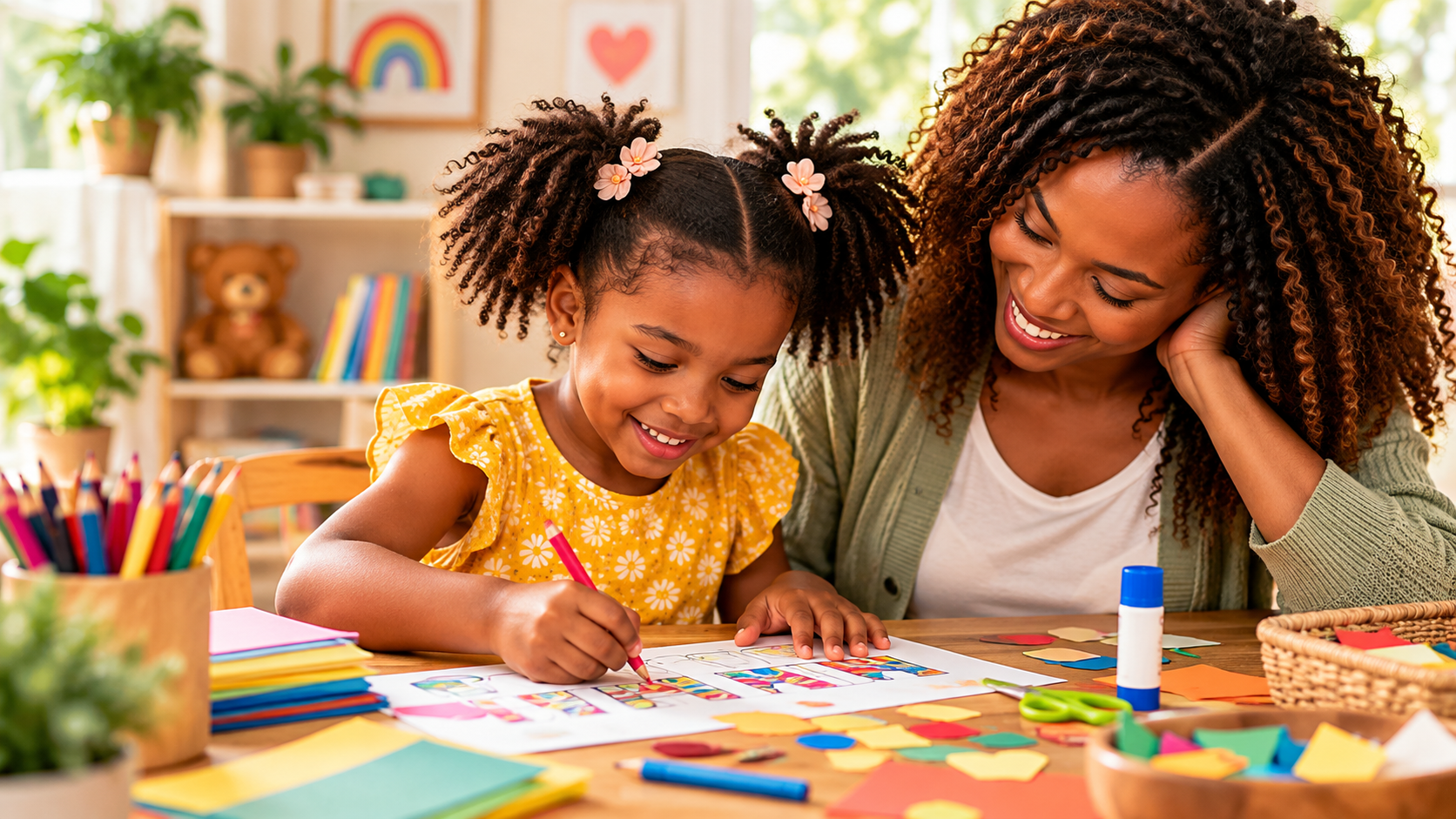
Looking for learning activities for a 4-year-old? Try these 20 simple, screen-free ideas for early literacy, maths, creativity, science, fine motor skills and everyday learning at home.
What can a 4-year-old learn through play?
At age four, children can learn through conversations, movement, hands-on exploration, pretend play and short structured activities. The best activity is one that matches the child's interests and gives them something meaningful to do, notice or explain.
20 Learning Activities for 4-Year-Olds
These activities include simple early literacy activities for 4-year-olds, as well as maths, creativity, science and fine motor practice. They are designed for parents and caregivers who want practical learning ideas without expensive materials.
1. Color Sorting Game
Collect safe household objects in several colors and ask your child to sort them into groups. Talk about similarities and differences.
2. Count Everyday Objects
Count spoons, socks, toys or pieces of fruit together. Ask your child to predict how many there are before counting.
3. Find the Letter
Choose one letter and look for it on food packages, books or signs. Say the letter sound together.
4. Shape Hunt Around the House
Find circles, squares, rectangles and triangles around your home. Ask your child to explain what they found.
5. Build a Tower
Use blocks or safe household materials to build a tower. Compare height and count the pieces.
6. Draw Your Family
Invite your child to draw family members. Encourage conversation about names, actions and feelings.
7. Continue the Pattern
Create a simple pattern such as spoon-cup-spoon-cup and ask your child what comes next.
8. Match Numbers and Quantities
Write numbers from 1 to 10 and match each number with the correct number of objects.
9. Tell a Story From a Picture
Choose a picture and ask your child who, what, where and what happens next.
10. Memory Tray
Place a few familiar objects on a tray. Let your child look, cover the tray and ask what they remember.
11. Sort Big and Small
Collect objects of different sizes and sort them into groups. Use words such as bigger, smaller, tallest and shortest.
12. Trace Lines and Shapes
Draw straight, curved and zigzag lines for your child to trace. Keep the activity short and playful.
13. Homemade Puzzle
Draw a simple picture, cut it into a few large pieces and invite your child to put it back together.
14. Follow the Instructions Game
Give two-step instructions such as “touch the chair, then clap twice.” Gradually increase the challenge.
15. Nature Collection
During a supervised outdoor walk, collect safe natural items such as leaves and compare their shapes, textures and colors.
16. Sink or Float Experiment
With close adult supervision, test safe household objects in a container of water and predict what will happen.
17. Pretend Shop
Create a pretend shop using safe household items. Practice counting, naming items and simple exchanges.
18. What Sound Is It?
Make familiar sounds behind a screen or your back and ask your child to identify them.
19. Complete the Drawing
Draw half of a simple object and invite your child to complete the other half.
20. Create a Simple Daily Routine Chart
Use pictures or words to show a few daily steps such as wake up, breakfast, play, reading and bedtime.
How long should learning activities last?
There is no single perfect duration. For many four-year-olds, short activities of around 5–15 minutes can work well, especially when the child can move on when interest drops.
A simple home learning routine
Try one activity in the morning, one during ordinary routines and one short reading or storytelling activity later in the day. The aim is consistent interaction rather than long lessons.
Safety reminders
Supervise water play, outdoor activities and any activity involving objects that could be swallowed. Adapt materials to your child's age and abilities.
Frequently asked questions
What are good learning activities for a 4-year-old at home?
Good activities are short, hands-on and connected to the child's interests. Counting everyday objects, finding letters, making patterns, drawing, storytelling and simple experiments can all create useful learning opportunities.
How can parents make learning fun for a 4-year-old?
Keep activities playful, give your child choices, ask questions and allow them to explore. You do not need expensive materials or long lessons.
How much should a 4-year-old practice each day?
There is no single required amount for every child. Several short learning moments throughout the day can be more practical than one long session.
More Learning Resources for Families
The activities in this article are a simple way to make learning part of everyday family life. If you would like to explore additional resources, here are two options that may be useful.
28 Daily Learning Activities — Havila Learning
Our 28 Daily Learning Activities eBook provides a structured four-week learning experience for children ages 4–8, combining play, creativity, exploration and meaningful family interaction.
Creative Kids Corner
Looking for even more creative activities for children? Creative Kids Corner is an additional resource for families looking for ideas that encourage creativity, imagination and hands-on learning.
Explore Creative Kids Corner →
Disclosure: This article may contain affiliate links. If you make a purchase through an affiliate link, Havila Learning may receive a commission at no additional cost to you.