20 Screen-Free Learning Activities for Children at Home
Simple activities using everyday materials to support literacy, maths, creativity, science, fine motor skills, problem-solving and family connection.
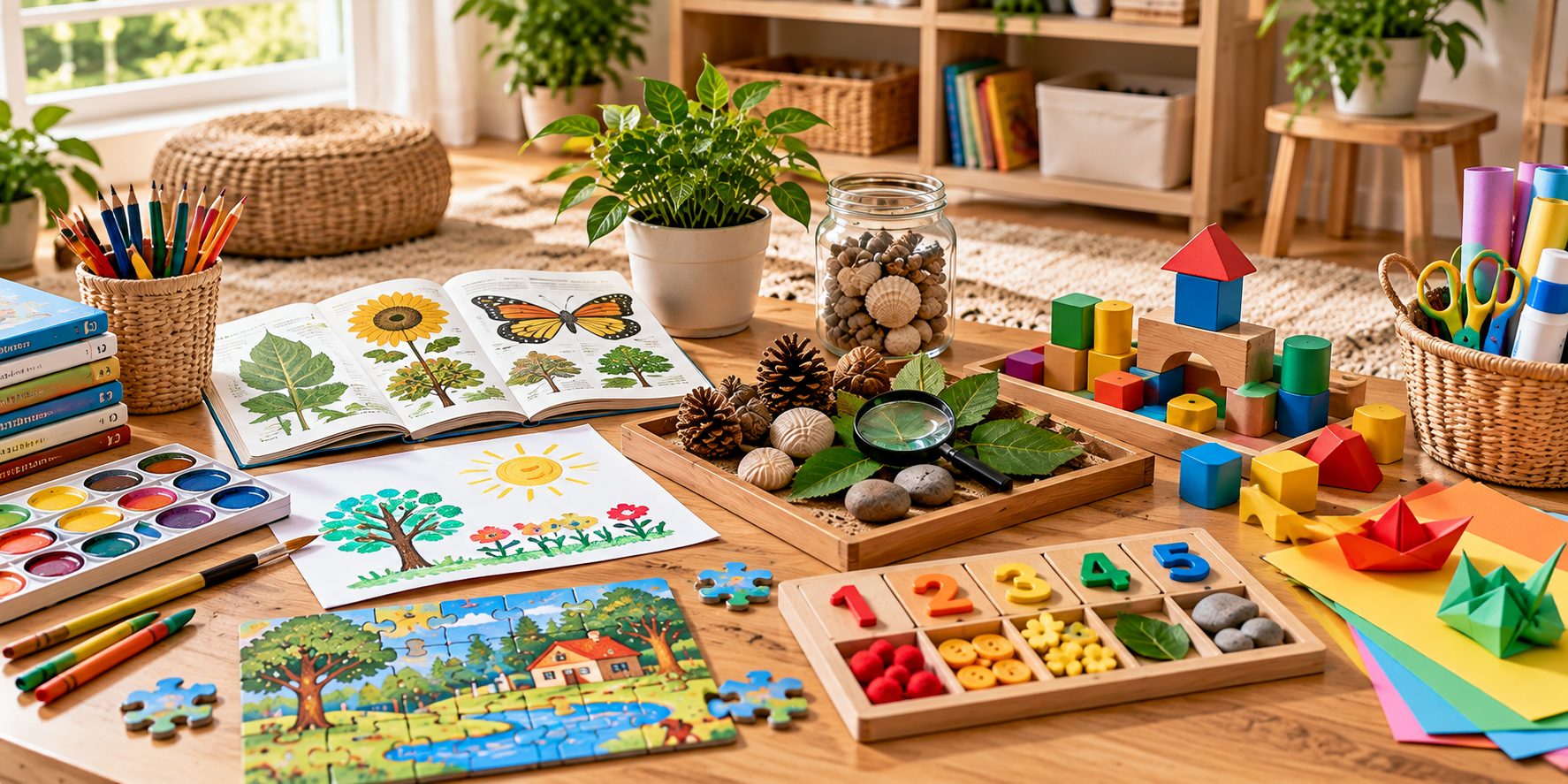
Children do not need expensive toys or complicated equipment to learn. A sheet of paper can become a writing activity. Bottle caps can become counting objects. A cardboard box can become a building project. A walk outside can become a science lesson.
20 screen-free learning activities
1. Count household objects
Choose safe objects and count them together. Ask which group has more or fewer.
2. Letter hunt
Choose one letter and find it on books, labels or packages. Say its sound together.
3. Storytelling from pictures
Choose a picture and ask what is happening, what happened before and what might happen next.
4. Build a tower
Use blocks or safe boxes. Count the pieces and discuss what makes a tower stable.
5. Sort by colour
Group safe objects by colour, then try sorting by size, shape or use.
6. Shape detective
Look for circles, squares, rectangles and triangles around the house.
7. Make a number game
Write numbers on paper and put them in order. Older children can create simple addition challenges.
8. Draw and describe
Ask your child to draw something they saw today and describe the picture.
9. Nature collection
During a safe outdoor walk, observe or collect leaves, stones or other safe natural objects and compare them.
10. Make a pattern
Create a pattern such as red-blue-red-blue and ask what comes next.
11. Memory game
Place five familiar objects on a table, let the child observe them, cover them and remove one. Ask what is missing.
12. Kitchen maths
During age-appropriate food preparation, count, compare and measure with adult supervision.
13. Create a mini book
Fold paper and create a cover, characters and a short story. Younger children can dictate their story.
14. Sound detective
Choose a sound and think of words beginning with it.
15. Build with recycled materials
Use clean cardboard boxes or paper rolls to make a house, bridge or other project.
16. Five-minute drawing challenge
Give a simple drawing challenge and add new instructions as the child works.
17. Feelings conversation
Ask what made the child happy, what was difficult and what helped. This builds emotional vocabulary and connection.
18. Daily routine chart
Create a simple chart with three to five daily tasks and let the child mark completed steps.
19. Family learning walk
Look for numbers, signs, colours, shapes, plants and sounds. Let the child lead some observations.
20. Family learning challenge
Choose one activity each day: Monday reading, Tuesday numbers, Wednesday creativity, Thursday nature, Friday life skills, Saturday family project and Sunday story and reflection.
You don't need expensive materials
Paper, pencils, bottle tops, clean containers, boxes, socks, leaves and stones can become learning materials when used safely and with a clear purpose.
Make room for screen-free learning
A balanced routine can include conversation, movement, outdoor play, reading and hands-on exploration. Instead of thinking only about removing screens, think about what meaningful activity will replace passive screen time.
Try one predictable 30–60 minute screen-free family session this week. Put devices aside, choose one activity and participate together.
Ready for more activities?
Crescer a Aprender brings together 28 practical activities for children ages 4–8, designed around learning through play, exploration and family interaction.
Explore the 28 Daily Learning Activities →
Final message
Children need opportunities to ask, try, make mistakes, create, move, talk and explore. Put the screen down for a while and pick up a book, pencil, box, ball or simply a conversation.
You may already have everything you need for a meaningful learning moment.
More from Havila Learning
Read The Importance of Parental Presence in a Child's Development and How to Build Self-Esteem in Children.